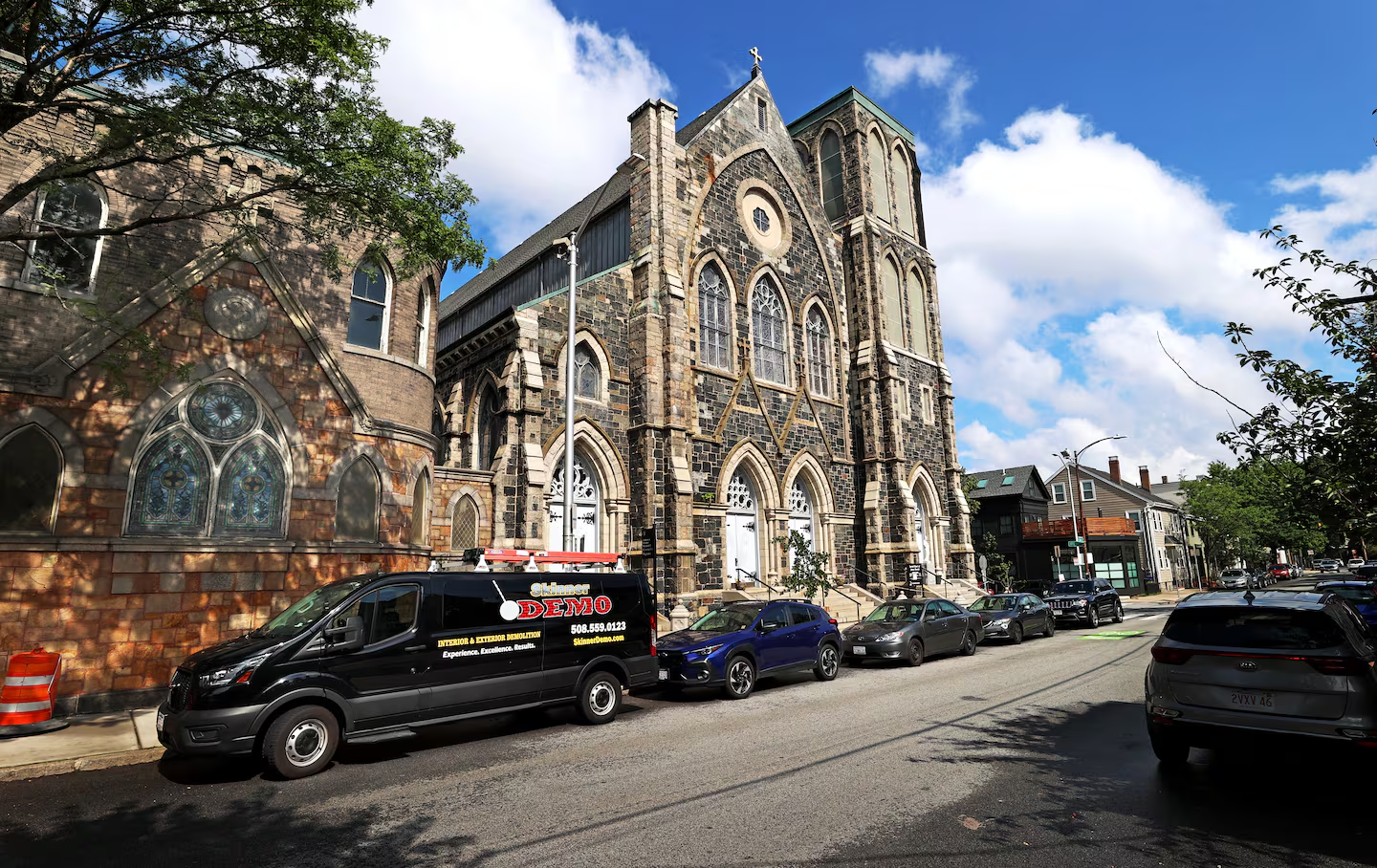
Our Lady of Sorrows convent sits on a peaceful green parcel of land across from Massasoit Community College in Brockton. The convent, which has a dwindling membership, recently sold its land to the Planning Office of Urban Affairs, part of the Archdiocese of Boston, which plans to build homes and apartments that will be set aside for families making up to the area’s median income. Over the next few years, the convent will host a total of 160 new mixed-income, mixed-tenure housing on the campus.
Affordable housing advocates and faith-based organizations see projects like this to be one of the strongest paths toward addressing Massachusetts’ housing crisis, and are pushing to make it faster, cheaper, and more efficient by allowing religious organizations to develop housing by right, meaning they would not need special permission from local zoning authorities. This niche housing proposal is suddenly on the fast track to becoming law after House lawmakers quietly folded “Yes in God’s Backyard” — or YIGBY — into their sweeping economic development bill.
Governor Maura Healey has set a goal of creating 222,000 homes by 2035. The YIGBY measure is one more step to help reach that target, and the Senate should send it to Healey’s desk. It is one practical way to provide equitable living opportunities for younger generations and seniors alike; a logical step following the MBTA Communities Act and legislation allowing by right accessory dwelling units.
One study by the Lincoln Institute of Land Policy’s Center for Geospatial Solutions and commissioned by the Lynch Foundation found that religious groups have close to 5,000 parcels of land — more than 20,000 acres — across the state that are potentially developable. The study reported that of the available acreage, nearly two-thirds of it is already by water and sewer lines, and 54 percent of it is walkable, making it ideal for development.
“At a really basic, practical level, we don’t have options in this state. We’re a very small state, and we’re densely populated,” said Kate Everett, the foundation’s executive director. “We ran all the analytics. There’s nowhere else to go but here.”
The YIGBY movement started in California seven years ago and swept across the United States with eight other states having considered or passed related legislation. Proponents encourage the bypassing of zoning restrictions that often discourage religious leaders from utilizing their land. Opponents say that municipal involvement at all levels is essential to protect communities, but there are proven stories of groups that have worked with communities successfully.
YIGBY was proposed earlier in the legislative session as a stand-alone bill allowing faith-based organizations to convert land into housing by right as long as 20 to 25 percent of units were reserved for low-income residents. The version the House wrapped into its economic bill restricts the size of the developable property to not more than four acres, and excludes property zoned for schools. Democratic Representative Andy Vargas of Haverhill, who sponsored the original bill, explained in an email that these changes were made to address concerns from fellow House members, but he remained “confident this unlocks lots of housing opportunities and the core of the YIGBY bill is intact.
“Ultimately this is a good faith effort to unlock more housing and chip away at the imbalanced supply-demand scale,” Vargas added.
Opponents, such as the Massachusetts Municipal Association, say they support building housing but that this particular legislation eliminates “appropriate public input” on issues regarding infrastructure, waterways, and whether projects are compatible with the neighborhoods, Dave Koffman, MMA legislative director, told the editorial board.
For religious groups, building affordable housing on their land is both furthering their mission of serving their community and aiding them in surviving to continue that work. For municipalities, the benefits should outweigh the lack of zoning control — these developments will make untaxable land taxable; they will retain and draw more people to the community; and they will help sustain organizations that care for the community’s more vulnerable groups.
So why religious institutions? One practical reason is that for historical reasons, they tend to own a lot of real estate, and that land tends to be in locations that are well suited for development. “Massachusetts in particular has a long history of churches being both a social but also physical center of communities,” said Shaina Korman-Houston, real estate director for the Planning Office of Urban Affairs. “[YIGBY] really honors that and allows this social pillar to continue giving back with one of the resources it has.”
Although religious entities can attempt to build under existing zoning regulations, that process is often daunting.
Kurt Lange, a pastor in Lynn, worked with his city and a housing nonprofit to develop apartments for unhoused youth in the building above East Coast International Church’s worship space. He’s been advocating for YIGBY, stemming from his own work and the conversations he said he’s had with pastors around the state.
“[YIGBY] will allow benevolently minded housing groups to go to faith groups that have excess property and space and say we can partner together with them,” Lange told the editorial board. “Most churches don’t have the skill set to build.”
Hartford Street Presbyterian Church in Natick has served its community through food distribution and a food garden. It has tried to build affordable housing on three acres of land for at least two decades, but has hit zoning barriers and community pushback. It even has developmental plans in hand. “We have always felt that part of our mission as a church is helping those in need through the housing crisis,” said the Reverend Jason Clapper. “YIGBY would be an answer to prayer.”